Showing posts with label Literature. Show all posts

Saturday, January 20, 2007

Perry Anderson on Russia Today

Perry Anderson has a long, illuminating take on Russia under Putin encompassing arts, culture, literature the state of the intelligentsia and political analysis.
Such tensions have certainly not silenced the arts. Fiction aiming at more than entertainment has never avoided the Soviet experience. Since the 1990s, however, representations of it have tended to become volatilised in the blender of de-realisations that typifies much current literature. Russian fiction has always had strong strains of the fantastic, the grotesque, the supernatural and the utopian, in a line that includes not only Gogol and Bulgakov – presently the two most fashionable masters – but such diverse figures as Chernyshevsky, Leskov, Bely, Zamiatin, Nabokov, Platonov and others. What is new in the current versions of this tradition is their cocktail of heterogeneous genres and tropes of an alternative reality, which seeks to maximise provocation and dépaysement. But such formal ingenuity, however startling, tends to leave its objects curiously untouched. The same techniques can dispose of Communist and post-Communist realities alike, as a single continuum. In Viktor Pelevin’s most lyrical work, The Clay Machine-Gun, the Cheka of the Civil War, the bombardment of the White House and the contemporary Russian mafia dance and merge in the same phantasmagoria. At its best, such literature is splendidly acrobatic. But, satirical and playful, most of it is too lightweight to impinge on deeper structures of feeling about the past. Scholarship is another story.
Technorati Tags: , ,

Friday, November 24, 2006

A Literary Guide to the World


The Salon has a great collection on literary destinations of the world. Some of those that interested me appear below.

Russia: Ken Kalfus provides a backdrop to the contemporary Russia and goes on a nostalgic trip to the past when great literature was written. A couple of remarkable insights:
Alienation, the struggle for a decent life, really bad weather -- the universal themes of this vast nation's literature make us all feel Russian at one point or another...

During the Soviet era, literature was an occupation slightly less dangerous than coal mining
And also this one from Nobokov:
In his notes to "Anna Karenina," collected in his "Lectures on Russian Literature," Nabokov recalls that one day when he was a small boy, he and his father encountered an old man on a street in St. Petersburg. The elder Nabokov knew the man, chatted briefly with him and then, after they parted, told his son, "That was Tolstoy." We don't know which St. Petersburg street so briefly channeled this confluence of talent.
Unfortunately, Kalfus does not discuss the contemporary literature coming out of Russia, nor some of the recent discoveries from the past, most notably Andrei Platonov.

Chile: A very comprehensive introduction to the literature from Chile, but leaving out, for some reason, one writer who has been making waves in the last decade, Roberto Bolano.

The crazy character of this wondrous land shines in the poems of Pablo Neruda, while its strife under Pinochet is captured best by José Donoso and Patricia Verdugo...

A country not quite like any other: thousands of miles long and never more than a few hundred miles wide, isolated from the outside world by the cordillera de los Andes to the east and the most turbulent ocean on this planet, ironically called the Pacific, roaring to the west. As if Norway and the Gobi, Oregon and Italy, the Alps and Nantucket, had been compressed into one small nation, a land that doesn't fit into a novel, a land that demands the delirium of poetry. No wonder Chile is known as "un país de poetas."

A land of poets.

Argentina:

Benjamin Kunkel discusses Borges, Bruce Chatwin, Cortázar, César Aira, Manuel Puig, Marguerite Feitlowitz's "A Lexicon of Terror" and Edwin Williamson's "Borges: A Life".

That he misses out Tomás Eloy Martínez is rather unfair.

From Borges to Bruce Chatwin, the rich and moody literature of South America's most European nation reflects its homeland's squandered potential...

And this sense of an Argentina constantly delivered, against its will, into the desolation of reality may also do something to explain why the most moving lines in Borges' poetry are always those uncharacteristic ones in which the imagination fails and the elaborate structures collapse. To a would-be lover he writes: "I can give you my loneliness, my darkness, the hunger of my heart; I am trying to bribe you with uncertainty, with danger, with defeat." To himself he says: "And I don't know how time can pass/ I who am time, and blood, and pain." And when at last he goes blind, as his father before him did, he says: "Soon I will know who I am."

Mexico:
In this place where the bizarre is banal and nothing is quite what it seems, it's no surprise that the literature will blow your mind...

In front of tourists, Mexicans become consummate actors. They'll say just about anything to enchant you, to make you lose your mind. This, after all, is a country where the bizarre becomes routine. Not surprisingly, foreigners return again and again as if hypnotized. Their account of life en el México profundo is as captivating as it is untrustworthy.
Ilan Stavan decides to focus less on the literature from Mexico, and more on the writing by Europeans including Graham Greene's "The Power and the Glory". This is rather unfortunate since there is so much of literature from Mexico that is of international stature. Mariano Azuela's" The Underdogs" manages to find a passing reference, as does Juan Rulfo's "The Burning Plain", though not his more famous "Pedro Paramo".

China: "To understand the last century of this vast Far Eastern country, look to the moving stories of Lu Xun, a celebrated memoir of the Cultural Revolution and an engaging, concise history."

Rest of the World (nothing on South Asia except for Afganisation. Though in the "Middle East" category)

Image Source

Link via Spatlit

Sunday, November 12, 2006

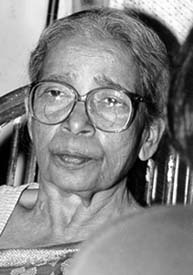
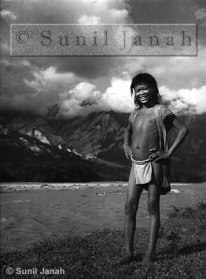
Writing as Resistance- The indomitable Art of Mahasweta Devi

Guest Post by Bhaswati Ghosh

Writers are often cited as perceptive observers of the prevailing human condition. Some of the greatest writers have used the power of their written word to bring across the struggles and sufferings of the exploited before a wider audience. There exists a small section of writers, however, which feels compelled to act as more than mere spectators and reporters of the human condition. They throw themselves into the fight, as it were, of deprived people.

Mahasweta Devi is arguably the finest example of activist writers in India. For more than a quarter of a century now, she has been actively working with tribals in certain Indian states. She fights for their basic rights, helps them unite and become self-reliant, and writes about their life, often reduced to a sub-human level by the rich and powerful. A prolific writer, most of her recent work draws from her association with these marginalized communities.

The Person: Mahasweta was born in undivided India in 1926, about two decades before India’s independence. The daughter of Manish Ghatak, a poet and novelist, and Dharitri Devi, a writer and social worker, Mahasweta probably had literary activism in her genes. It was community service that emerged on the scene before writing, though. As a college student, Mahasweta joined her friends for providing relief to the victims of the infamous man-made Bengal famine (1942-44). They would distribute food, check through dead bodies lying in street to reach out to those still alive, feed them and take them to relief centres. This direct, raw brush with suffering became the seed of Mahasweta’s empathizing disposition.

Marriage came early, at the age of 20, when she tied the knot with Bijon Bhattacharya, a renowned Bengali playwright. Her husband was also a member of the Communist Party of India (CPI), and at the time the couple was establishing its marital life, communists often became the targets of persecution. As a result, it became tough for Bhattacharya to support his family, extended with the birth of their son, Nabarun, two years after their marriage. Mahasweta did several odd jobs to keep the hearth burning—selling dye powder, supplying monkeys for research to the U.S., teaching at a school, private tuitions—before she finally got a government job at the Post and Telegraph department. But this job was not to last for too long either. Someone dropped a few books of Marx, Lenin, and Engels in her office drawer, and Mahasweta was terminated on the charge of being a communist.

The Writer:
This is when she took to the pen—mainly to supplement family income. She started with light fiction for literary magazines. Her first book-length work appeared in 1956. Jhansir Rani or The Queen of Jhansi was a fictional account of the life of Lakshmi Bai, an Indian woman ruler who valiantly led her forces to fight the British, before being killed by them at age 22. Even as a first-time author, Mahasweta showed the impractical sincerity that distinguishes true writers of historical fiction. She borrowed money from family and friends to travel to the Bundelkhand region in north India, where Lakshmi Bai ruled, and walked her way through remote villages and deserts, collecting oral history, folklores, and ballads. Interestingly, this same seriousness of approach in collecting data for her stories would be seen years later, during the activist phase of her life.

The debut book brought Mahasweta recognition as a writer, and thus started her ascent in the world of Bengali literature. She authored several books, adding the pennies toward sustaining her family, while at the same time mirroring the prevailing social atmosphere. This promising writer went through a period of personal turmoil, during which time her marriage broke apart, and she suffered from acute depression. Bouncing back soon, she completed her master’s degree in English and served as a lecturer of English literature for two decades. This was also the period when she came up with her seminal novel, Hajar Churashir Ma (The Mother of 1084), which deals with the Naxalite movement in West Bengal that saw many young lives ending before their prime. The book captures the sad realities of the movement through the eyes of the mother of one such young boy. In her attempt to understand the violent movement, this mother comes face to face with her sense of estrangement from the double standard-ridden bourgeois society to which she belongs. Poignant, yet shorn of overt sentimental elements, the novel made a big impact on readers across India and was recently taken to the silver screen by director Govind Nihlani.

The Activist: Over the next few years, Mahasweta’s pen took a decisive turn. She started integrating history into her storytelling. This wasn’t the conventionally disseminated history though; this was forgotten history, a part of the past that had been conveniently kept under the wraps. She wielded the power of narrative to document as well as spread stories of tribal resistances against the British and other social exploitations in books such as Aranyer Adhikar (Right to the Forest), and Chotti Munda O Tar Teer (Chotti Munda and his Arrow), among others. Here was a writer who truly wrote what she knew. Her vocation wasn’t divorced from her writing. She is amongst the foremost activists working for a better life for India’s tribals. Not content to stay cosy within her writing room, she ventured deep into the forests to live and work with tribal people.

She founded India’s first bonded-labour organization in 1980, bringing together thousands of bonded labourers to give them an organised platform for raising their voice against forced labour. A year before this, she turned Bortika, a literary periodical edited by her, into an open forum in which tribal people, peasants, factory workers, and rickshaw pullers wrote about their day-to-day experiences and problems.
This effort of hers is groundbreaking, since it records the issues of the underprivileged in their own words, unadulterated and unadorned. She went on to create a tribal welfare society for the Kheria and Shabar tribes, which are among the poorest in India. In 1986, this untiring champion of the voiceless founded the Adim Jaati Aikya Parishad or Ancient Tribes Union, a forum of 38 West Bengal tribal groups.

Nine years ago, at 71, Mahasweta received the Ramon Magsaysay Award for “her compassionate crusade through art and activism to claim for tribal peoples a just and honorable place in India's national life.” While accepting the award, she said, “I will have a sense of fulfillment if more and more young writers took to unbeaten tracks. My India still lives behind a curtain of darkness. A curtain that separates the mainstream society from the poor and the deprived. But then why my India alone? Cannot one say the same for so many countries and societies today? As the century comes to an end, it is important that we all make an attempt to tear the curtain of darkness, see the reality that lies beyond and see our own true faces in the process."

Bhaswati Ghosh is a writer sensitive to social concerns. She blogs at "At Home, Writing".

Images:
Delirium
The Hindu
Comrade Sunil Janah's Site

Thursday, November 02, 2006

Roberto Bolano's Advice on the Art of Writing Short Stories


Never approach short stories one at a time. If one approaches short stories one at a time, one can quite honestly be writing the same short story until the day one dies.

It is best to write short stories three or five at a time. If one has the energy, write them nine or fifteen at a time.
...

Short story writers customarily brag about having read Petrus Borel. In fact, many short story writers are notorious for trying to imitate Borel's writing. What a huge mistake ! Instead they should imitate the way Borel dresses...
...and more Advice on the Art of Writing Short Stories (pdf file)

Link via Literay Saloon

Image Source

Tuesday, September 19, 2006

What Chavez Reads

Simon Romero investigates the Bolivarian Revolution leader's reading list:

Often, as he talks on, Chávez drops the names of books he is reading or has grown to love, giving insight into the various intellectual and literary influences on his thinking and what he calls his Bolivarian Revolution, an amalgam of socialist-inspired and anti-American policies.

Favorite authors include Victor Hugo, with "Les Misérables" at the top of his must-read list, with its description of passion amid revolutionary barricades. At the swearing-in of ministers for nutrition and the people's economy, Chávez recited a passage from the introduction about the need to stamp out ignorance and poverty.

"Don Quixote" by Miguel de Cervantes also features prominently in his speeches, with Chávez identifying with the eccentric knight-errant fighting injustice. To celebrate the 400th anniversary of the book's publication, the government paid for a million copies to be distributed free last year. Venezuela also paid for 70,000 copies in English for Caribbean neighbors and 5,000 in French for Haiti.
Link via Literary Saloon

Related Post

Tags: , ,

Saturday, September 16, 2006

The Underdogs- A Novel of the Mexican Revolution by Mariano Azuela

Few novelists have managed to create a successful short novel- some that instantly spring to mind are Turgenev (Father and Sons, Rudin), Juan Rulfo (Pedro Paramo), Kurt Vonnegut (Slaughterhouse Fiftyfive Five ), even Flaubert (Madame Bovary) and perhaps a few more complete the list.

To this short list also belongs Mariano Azuela's classic novel about the Mexican Revolution: The Underdogs. In a mere 150 pages, Azuelo captures the tribulations of an Indian peasant leader- Demetrio Marcías and through him, the tribulations of the Mexican Revolution. Suffice would be to quote a a few lines from the novel that also serves as the summary of the novel:

Villa? Obregon? Carranza? Who do I care? I love the Revolution like I love the volcano that's erupting! The volcano because it is a volcano; the Revolution because it's the Revolution!... But the stones left above or below after the cataclysm? What are they to me?

...

"Why do you keep on fighting, Demetrio?"

Demetrio, frowning deeply, absentmindedly picks up a small stone and throws it to the bottom of the canyon. He stares pensively over the precipice and says:

"Look at the stone, how it keeps going..."
The stone falling into a bottomless precipice is allegorical about the fate of the Mexican Revolution itself.

Tags: , ,


Saturday, September 02, 2006

The Unknown Masterpiece by Balzac

Marx pondered if his magnum opus Das Capital would meet the fate of the painting in Balzac's The Unknown Masterpiece, Picasso actually tried to emulate the fiction in his last painting and Cezanne admired this short story.

Considereing that it is a mere 22 pages, it is amazing how much Balzac has managed to pack into The Unkown Masterpiece- there is the question of the relationship between art and life, between love and art and the search for perfection.

Balzac recounts the story of a 17th century painter Frenhofer who, in his search for perfection, spends ten years painting his masterpiece. However, when he shows it to two of his young admirerrs, they see nothing more than a canvas daubed with paint.
The old man, absorbed in reverie, did not listen to them; he was smiling at that imaginary woman.

"But sooner or later he will discover that there is nothing on his canvas!" cried Poussin.

"Nothing on my canvas!" exclaimed Frenhofer, glancing alternately at the two painters and his picture.

"What have you done?" said Porbus in an undertone to Poussin.

The old man seized the young man's arm roughly, and said to him:

"You see nothing there, clown! varlet! miscreant! hound! Why, what brought you here, then? - My good Porbus," he continued, turning to the older painter, "can it be that you, you too, are mocking at me? Answer me! I am your friend; tell me, have I spoiled my picture?"

Porbus hesitated, he dared not speak; but the anxiety depicted on the old man's white face was so heart-rendering that he pointed to the canvas saying:

"Look!"

Frenhofer gazed at his picture for a moment and staggered.

"Nothing! Nothing! And I have worked ten years!

He fell upon a chair and wept.

"So I am an idiot, a madman! I have neither talent nor capability! I am naught save a rich man who, in walking, does nothing more than walk! So I shall have produced nothing!"
Balzac ends the story in a way that one can see the almost King Learish tragedy of the painter- betrayed by his own work, as well as the story of perfection in which the work of art arrives before the aesthetic required to appreciate it has developed.

In either case, it is a story of art as transgression and a tragedy par excellence.

Image: Picasso's rendition of Frenhofer painting The Unkown Masterpiece. Acknowledgement

Tags: , , , ,

Saturday, August 26, 2006

'We' by Yevgeny Zamyatin

We by Evgeny Zamyatin is often seen as a precursor of George Orwell's dysutopian novel 1984. Indeed, there are similarities, though We strikes one with it's novelty and the fact that it was written in 1920-21, when the newly formed Soviet government was just beginning to consolidate itself.

Lenin was still alive, the Stalinist terror had not yet begun.

While it is possible to read We as a dysutopian novel- a critique of the socialism as it evolved under Soviet rule, it can also equally be read as a critique of positivism- a school of thought that reduced human nature to empirical and scientific facts.

It is a critique of a technocratic society and comparisons with modern Western societies are inescapable.

The novel is situated in about 3000 AD. The central character is numbered D-503- the level of civilization reached requires no names, everyone is a number. D- 503 is a mathematician/ engineer whose life is disrupted when he is attracted towards a woman I-330.

Even love appears as a mathematical problem when his mind grapples with the nature of an irrational number (the square root of minus 1).

D-503 is a law- abiding number who has absolute faith in the Benefactor, the supreme, God- like head of the One State. He recognizes the superior nature of his society. He compares his present with the primitive 20th century, for example, when he goes to vote in the election that every time unanimously returns the Benefactor to power. Those that disagree, are obvioulsy eliminated in a grotesque ceremony presided over by the Benefactor himself.
Naturally, this is entirely unlike the disorderly, disorganized elections of the ancients, when- absurd to say, the very results of the elections were unknown beforehand. Building a state on entirely unpredictable eventualisties, blindly- what can be more senseless?
Despite the inevitable comparisons with Orwell's 1984, there is reason enough to believe that Zamyatin is more optimistic. At the end of novel, the One State- the State of Reason survives, but also suffers a blow, as the Wall that separates the sanitized One State from its primitive human neighbours is pushed back.
This cannot be postponed, because in the western parts of the city there is still chaos, roaring, corpses, beasts and unfortunately- a considerable group of numbers who have betrayed Reason.
The conflict between Reason and 'primitive' society (when numbers were humans) continues.

It is significant that while Zamyatin resisted efforts by the Party to censor his works, he considered himself to be a Soviet writer till his end in 1937.

His Bolshevik perspective comes through at places:
Then how can there be a final revolution? There is no final one; revolutions are infinite.
In 1931, Stalin had, miraculously, granted Zamyatin permission to emigrate. Zamyatin died in Paris in 1937, waiting for his return.

He was thus spared the fate of many other writers who were to satirize the emerging Soviet society. Andrei Platonov, for example, spent his last years as a window cleaner and whose works like The Foundation Pit, Soul and Happy Moscow saw the light of day only towards the end of the Soviet Union.

Tags: , , , ,

Friday, August 18, 2006

Why Sandor Marai is not translated into English

For someone who practically reads only literature translated from other languages into English, the good news is that Sándor Márai's The Rebels is finally being published in English.


The bad news, as I realized while browsing a German translation of Sándor Márai's Embers, is that there are at least 14 titles by Márai that are available in German, compared to only two in English- (Conversations in Bolzano being the other one besides Embers.)

Indeed, though a number of classics are being retranslated into English, it turns out that that new works in other languages are not exactly flooding the market.

The reason, in case you are wondering, is economics:
My theory is that there is a vicious cycle working against the publication of translations, which results in a state of economic censorship. It costs around $25,000 to publish a book. For a work in translation that figure is closer to $35,000. So before even coming out with a book, publishers are spending an additional $10,000 to do a work in translation.

Most works of serious literature (in contrast to mainstream books), sell about 3,500 copies in the United States. For literature in translation, bookstores will usually take fewer copies because they believe the book won't get many reviews and that people are scared of translations.

Reviewers, in fact, review far more works written in English than translations. As a result, fewer readers find out about these works in translation, and the final sales figure is closer to 2,000 copies. After costs, the average publisher gets back around $8.50 for every hardcover sold, and approximately $5.00 for every paperback. 2,000 copies sold generate between $10,000 and $17,000.

An editor convinces the publisher to publish a book in translation that costs the company $35,000, has poor advances, almost no reviews, sells 2,000, and brings in $17,000, losing the company $18,000. Next time this editor will have a much harder time convincing the publisher to take a chance, to lose another $18,000 in the name of cultural worth. This is what I refer to as economic censorship. In order to avoid losing money, publishers avoid translations, and fewer and fewer find their way into print.
Perhaps rather trite an explanation, but helps explain why there is not enough of Márai translated into English.

A related post on other Hungarian gems waiting for translation into English.

Link to Sándor Márai's The Rebels via Sándor Márai Blog.

Tags: , ,

Thursday, August 17, 2006

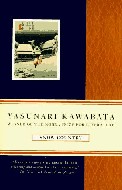
The Sadness of Yasunari Kawabata

After reading Yasunari Kawabata's Snow Country, one cannot dispel the overarching feeling of sadness that permeates the work and envelopes the reader. In my case, the very name of Kawabata is associated with sadness years after I read the work, making him probably the only writer whose literary style I could appreciate and yet decided not to read any more of his books just to escape the melancholy that gripped after reading his works.

In seeking beauty, the jaded Shimamura discovers ultimately that he can know only sadness.
This sadness was no in no way unique, and was related to the military defeat of Japan in World War II.

Japanese literature was most profoundly affected by the second world war- the other one that comes to mind is the existentialist movement associated with Jean Paul- Sartre and Albert Camus in France.

Yasunari Kawabata was the first Japanese writer to be awarded the Nobel Prize in 1968. In 1972, he committed suicide by putting his head inside a gas oven.

Jason Cowley, writing in The New Statesman, provides an overview of the writer, who escaped the influence of the "proletarian wave" of the 1920s- 1930s in Japanese literature and emerged as one of the major voices of what is termed as the 'post- war' literature in Japan.
Was this sadness common to all Japanese, as he would have us believe? Or was it something much more personal, an expression of Kawabata's own ontological perplexity - the sadness of the adult who was once an orphaned child, lost and alone in the world? Whatever the origins of this sadness, Kawabata decided that, with the war's end, he would write only elegies; and so, on the whole, he did, producing some of the strangest and most memorably affecting fiction in 20th-century literature, the last major writer to work in the "classical" Japanese tradition. Today, the Japanese writers most familiar to western readers, from the Nobel laureate Kenzaburo Oe to Haruki Murakami, are inter nationalists in style, attitude and ambition, their politics largely leftist or liberal and their familiarity with popular culture - with Hollywood, the American vernacular, pop and the buzz of new technologies - obvious.

Kawabata was different. Influenced by the formal austerity and sparse, fragile lyricism of haiku, he is a miniaturist: he compresses where others seek to inflate and enlarge. His is a fiction of extreme economy, even of emptiness.
read on...

Link via The Literary Saloon
Tags: , ,

Saturday, August 12, 2006

Santa Evita by Tomas Eloy Martinez

In an apparent attempt to reduce the popularity of her own blog, Bhaswati Ghosh invited me to guest- post at her blog "At Home, Writing".

My thanks to her. After all, the risk is all her's :-)

***
In the short span of six years between 1946 to 1952, Eva Perón, the wife of the Argentinian dictaror and founder of the Perónist party, Juan Perón, won over the Argentinian people so much so that her popularity was said to rival, if not exceed, that of Juan Perón himself. Having risen from obscurity, the youngest daugher of an unwed mother, her rise had been all the more spectacular.

Tomás Eloy Martínez's Santa Evita could have been termed as a biographical account Eva Perón's life had the author chosen to write about her short but eventful life.

Instead, he has chosen to write about her corpse.

Eva Perón's body, like Lenin's, was embalmed after she died of cancer at the age of 33, at the height of her popularity. However, before the corpse could be housed in a mausoleum for public display, Juan Perón was overthrown in a military coup, and thus began the after- life journey of Eva Perón, as the incumbent military government wondered what to do with the embalmed body.

To bury the corpse could have, they feared, incited the loyal Perónists and even the masses. And Eva dead was perceived as more dangerous than the living one.

Even a few replicas were created to mislead any followers, and attempts were made to bury them. For over a decade, the corpse and the replicas changed hands and locations, traversing within Argentina and to Europe- one replica was buried in Bonn and the actual corpse in Milan, Italy from where it was finally recovered and returned to Juan Perón after his return from exile in Spain.

Martínez recounts the stories of all those that came in contact with the corpse, and the often calamitous ends that they came to. Insidious accidents wait those entrusted with the corpse.

Some were haunted till death, some met with unexplicable accidents and others were relentlessly followed by a mysterious person called the 'Commander of Vengeance'.

It is characteristic of Martínez to write a novel that takes the after- life of Eva Perón rather than her not less eventful life as its theme. He does show us slices of her life too but often as flashbacks and in recollections of those that he meets with.

In a sense, therefore, he underlines the persona that outlived Eva Perón herself.

This is akin to his previous novel, the redoubtable The Perón Novel, where he focussed not so much on Peron's politically active years, but the seemingly innocuous journey of an exiled dictator returning to his home country in old age.

Santa Evita is a novel within a non- fictional account where Martínez goes out in serach of information about Eva Perón's corpse- the story emerges as he interviews people associated with Eva or later with her restless corpse.

He makes the reader an accomplice in this journey of discovery- it becomes very much like a mystery in which the reader has as many, and more often as few, clues as the writer. This makes the novel extremely readable, if not racy.

Santa Evita turned out to be unputdownable, and I finished it within a week. Along with The Perón Novel , it has been one of my best reads from Latin America in the last one year.

[Cross posted at Bhaswati Ghosh's blog: At Home, Writing]


Tags: , , , , ,

Friday, August 11, 2006

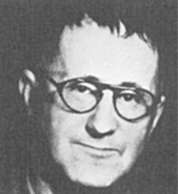
Bertold Brecht: This chap Marx...

This week marks the 50th death anniversary of Bertolt Brecht.


As Brecht himself put it, he found out that “this chap Marx was the first person to really understand my plays”:
One year before the East German Revolution in 1989 the government built a Brecht monument in front of the Berliner Ensemble. The memorial demonstrates how the East German dictatorship read Brecht. There is a quote from The Mother:

Who still lives, should not say never!
The secure is not secure
So, the way it is, it will not remain

But Brecht’s concluding two lines are missing:

After the rulers have spoken
The ruled will speak

In the end, Brecht’s conclusion outlasted the East German rulers - and it is this Brecht that we should read today.
For me personally, one of the most incisive plays that I ever read was Galileo, from wherein a popular quote is:
Unfortunate is the land that needs heroes.
Tags: , , , ,

Tuesday, August 08, 2006

Blogging in the Time of Vietnam War

A journal written by a young woman doctor named Dang Thuy Tram during the Vietnam struggle is now a bestseller in Vietnam. Had internet been available then, I am sure she would have blogged these experiences:
"My youth is over: Fire, smoke and war have robbed my youth of the happiness of love," she writes "The 20-year-olds of this generation have given away the dreams and happiness which they should have had. My youth is soaked with sweat, tears, blood and the bones of those living and those already dead."

...

The Americans attack on June 22. One GI reported later to Whitehurst that the doctor tried to fight off the heavily armed soldiers with a single-shot rifle.

There were no Vietnamese survivors to tell her story; the five wounded guerrillas were killed with her. But her remains, buried by villagers and turned over to the family in 1976, also indicate that she stood her ground.

"When I went to pick up her bones, I saw a bullet hole in her forehead," Dang Kim Tram said. "I imagine that she would pick up a gun. I know for sure that she faced the enemy."

Four days before her death, Dang Thuy Tram seems to recognize that the end is near.

"When you live like this, then you understand the value of life," she writes. "Oh, life changed by blood and bones, by the youth of so many people, how many lives have ended in order to allow other lives to be fresh and green?"

Technorati Tags: , ,

Tuesday, July 25, 2006

The Time of the Hero by Mario Vargas Llosa

The Time of the Hero was published in 1961 when Llosa was 25- it was immediately burned by the authorities for exposing the perversities of the Military Academy that was supposed to churn out candidates who would then hopefully join the military.

The novel is tedious in the first half, and begins to make better sense after the first 250 pages. The patience is worth it- all the elements of the future Llosa are there, even as the impact of William Faulker is very much evident.

There are multiple narratives, shifts in time and space, and in the battle between the reader and the writer, the initial incursive strides of the reader in the first 250 pages are shortlived.

The triumph of the writer thereafter is rapid, and unassailable.


Tags: , , ,

Technorati Tags: , , ,

Saturday, July 15, 2006

Karma, and Rebirth

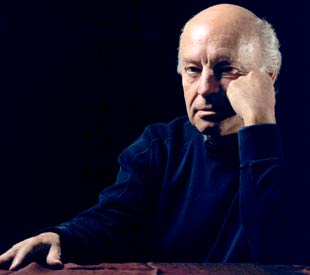
Uruguyan author Eduardo Galeano in an interview with Scott Witmer, speaks on why we need to remind ourselves of being born again- because we have a long tradition of being betrayed.
Just look at Evo Morales, the president of Bolivia. Bolivia was the richest country in all of the Americas at the beginning of the conquest period. They were the owners of the silver, which made possible the enrichment of Europe. Bolivia is now the poorest country in South America. Her richness was her main damnation. Morales is now trying to break with this shameful and humiliating tradition of always working for another's prosperity. When he nationalized the gas and the oil, it was a scandal all over the world. "How could he? It's terrible!" Why is it terrible? Because recovering dignity is a cardinal sin. But he's also committing another cardinal sin: He's doing what he promised he would do. We in Latin America are suffering with special intensity the divorce between words and facts. When you say yes, you do no. When you say more or less, you do less or more. So facts and words are never encountering each other. When they pass each other by random accident, they don't say, "Hello, how are you?" because they have never met before. We are trained to lie. We are trained to accept lies as a way of life.

Tags: , , , ,

Technorati Tags: , , , ,

Tuesday, July 04, 2006

Love, Life, Goethe

C J Schüler reviews "Love, Life, Goethe" by John Armstrong:

(the central work of Goethe's career, Wilhelm Meister's Apprenticeship is) the story of a young man's vacillations between the demands of business and the enchanting world of the theatre, it is the original Bildungsroman, the novel of a person's moral education in the school of life, and thus the progenitor of one of the richest seams in European literature that includes Flaubert's Education Sentimentale, Dickens's David Copperfield and Joyce's A Portrait of the Artist as a Young Man. It is not reasonable, the novel seems to be telling us, to expect the world to be arranged for our convenience; difficult and painful though it may be, it is up to us to fit ourselves for the world as it is, so that we can help, in no matter how small a way, to make it a better place.

It is precisely this aspect of Goethe's world-view, which on the one hand makes him so difficult for us to grasp, that makes him so valuable. The problem is not that it is hard to understand, but that it is hard to accept. Since the Romantic movement, we have wanted our artists to be damaged, dysfunctional and doomed. Byron, famously, was mad, bad, and dangerous to know; Goethe was eminently sane, and strove throughout his long and successful life to be a good and useful member of society. If cultivated people are too fastidious to dirty their hands with the compromise, he believed, intelligence will be impotent and power will be left in the hands of villains and fools.

Tags: ,

Saturday, July 01, 2006

Fact and Fiction behind Chávezspeak

Greg Grandin on the fiction that informs Hugo Chávez's speeches and the facts of the transformations that he has forced through Venzuela:
There is something quaint—flattering, even—about the way Venezuelan President Hugo Chávez insists on calling George W. Bush “Mr. Danger.” The taunt, which Chávez delivers in English with rolled-out vowels and pinched consonants, evokes an earlier era of cloak-and-dagger politics and lends Bush a certain mystery that he is generally denied in these shrill times of stateless terrorism. Mr. Danger, it turns out, is a minor character in Rómulo Gallegos’s 1929 novel Doña Barbara, a landmark in Venezuelan literature and before the fiction boom of the 1970s one of the most widely read Latin American novels in the world. A “great mass of muscles under red skin, with a pair of very blue eyes,” he is one of many unsympathetic misters who populate 20th-century Latin American social and magical realist prose, beginning in 1904 with the Chilean writer Baldomero Lillo’s abusive mine foreman Mr. Davis and continuing through Mr. Brown, the manager of a U.S. banana company in Gabriel García Márquez’s One Hundred Years of Solitude.

In Doña Barbara, the inhabitants of Venezuela’s untamed southern plains at first welcome the arrival of Mr. Danger, believing that he will bring “new ideas” to help modernize the region’s agricultural production. Their hopes are quickly dashed as the “scornful foreigner” loafs in his hammock, smoking his pipe and living off rustled cattle, stirring only to shoot alligators and ply his neighbor with liquor to steal his property and despoil his daughter. Mr. Danger is a “humorist in his own way” who, when introducing himself, repeats his surname in Spanish— peligro—“to emphasize its disconcerting translation.” It’s a trick Chávez, also easy with a joke, likewise enjoys: “The greatest peligro in the world,” he warns, “is Mr. Danger.”

Link via 3Quarkdaily

Technorati Tags: , , ,

Tuesday, June 27, 2006

Sparking a Rebellion

He has said all this before, but here goes the Master on reading and writing, and sounds as refreshing as ever.

While offering an escape, Vargas Llosa says, fiction also has the ability to spark rebellion within a life. To explain the difference between literature as fantasy and as agent of change, he mentions two famous fictional characters who are themselves readers.

"Madame Bovary doesn't read masterworks. She reads ... pulp fiction. That's what she reads: pulp fiction, love stories, very banal, very superficial. But these stories disturb her profoundly, because they give her the idea of a very different kind of life. A life of pleasure. A life of romantic deeds. A life in which women become heroines, martyrs. Romantic martyrs of love.

"And so what does she do with all this? She does exactly the same thing that Don Quixote does when he reads chivalry novels. He thinks life is like life in chivalry novels! ... In the case of Madame Bovary it's tragic.

"We admire Don Quixote because he doesn't accept the world as it is. Well, I think that is the function of literature: to make us desire a different kind of world and to create in us a kind of dissatisfaction with the world as it is. I think this is a very important function, because this gives you a kind of motivation to act for changing things, for transforming not only the society but moral values, cultural values."

Link via 400 Windmills

Tags: , , ,

Saturday, June 24, 2006

Distant Stars by Roberto Bolano

Roberto Bolaño died three years ago at the relatively young age of 50 , at the pinnacle of his career as a writer and before he could be better known in the English knowing world.

The translation into English of his By Night in Chile a few years ago marked his arrival in the English world. Distant Stars is the next book translated into English. His collection of short stories Last Evenings on Earth has been published recently and the translation of his most ambitious posthumus work 2666 is eagerly awaited.


The theme of Distant Stars is the same as the By Night in Chile, the over two decades of unbridled exercise of power by the dictatorship of Augusto Pinochet after the violent overthrow of the socialist government of Salvador Allende on that other, less remembered, 9/11 of 1973.

The theme has been attempted by other writers, notably by Ariel Dorfman in The Last Song of Manuel Sendero, who made a vastly more experimental attempt at capturing the brutality of those years. In contrast, Distant Stars is a relatively simpler novel, closer to Dr Faustus by Thomas Mann, but less verbose and less tedious.

Mann had taken the analogy of the folk legend of Faust and Mephistopheles where a musician signs a pact with the devil (in this case Nazi Germany), to illustrate the immorality of those who had been accomplices of the Nazi regime. Bolaño, in this work, takes the case of an avant garde poet, Carlos Wieder. In the process he also offers insights into the lives of that generation of poets that was torn apart by the dictatorship: "Madness was not exceptional at that time," he remarks, when Carlos Wieder inaugurates a new form of poetry by writing one and two liners poems in the sky on an airplane.

While Carlos wins accolades from the regime, other poets meet with a different fate. "The good news was that we had been expelled from the university, the bad was that almost all of our friends have disappered", the narrator's friend Bibiano observes. There are many incidents that recount the "melancholy folklore of exile- made up of stories that are fabrications or pale copies of what really happened".

Carlos meanwhile goes on to experiment with other forms of 'literature' till it becomes so grotesque that even the supportive regime finds it difficult to continue to stand by him. Bolaño unmasks the gory details, and Wieder's participation in the brutalization of the Chilean soceity during the dictatorship. Wieder's unwritten pact with the devil becomes evident.

Bolaño scores with the fact that he is able to evoke a series of sub texts that are pregnant with possiblities. The following narration, for example, by the Indian maid of one the victims of the Wieder's murderous crimes indicates a new trajectory that deserves a different treatment altogether.

The maid makes an appearance in the court against the defendent Carlos Weider when his crimes are discovered.
Over the years her Spanish had dwindled. When she spoke every second word was in Mapuche... in her memory the night of the crime was one in the long history of killing and injustice. Her account of the event was swept up in a cyclical, epic poem, which, as her dumbfounded listeners came to realize, was partly her story, the story of the Chilean citizen Amalia Maluenda, who used to work for the Garmendias, and partly the story of the Chilean nation. A story of terror.... Remembering the dark of the crime, she said she had heard the music of the Spanish. When asked to clarify what she meant by "the music of the Spanish," she replied: " Sheer rage, sir, sheer, futile rage".
Cross posted here.

Tags: , , , ,

Saturday, June 17, 2006

Alice's Wonderland

Shelly Walia accidentally traverses Alice's wonderland:
As the myth goes, she had fled to Binsey in her endeavour to escape marrying the king of Mercia who pursued her to the gates of the church only to be struck blind by lightning. But on her plea to God, a spring appeared, the waters of which healed the blind king. To our astonishment, it was this well which had inspired Lewis Carroll to imagine the ‘Treacle Well’ in Alice in Wonderland, “treacle” apparently meaning “healing unguent”.

On our way back, I mused over my childhood reading of Alice in Wonderland and imagined Carroll almost a century ago standing at the same place conjuring up one of the most enthralling stories of the century. By now we had become quite thirsty. We decided to have a beer at the Perch, a pub dating back to the 16th century when it was an inn for the pilgrims visiting the church. And to our astonishment, there were not less than 200 visitors swarming over the lawns of the pub, a joyous gathering which I am sure included the villagers too, frolicking on that Sunday morning under Binsey poplars that Gerald Manley Hopkins wrote so delightfully about. No wonder the village had looked deserted.

Technorati Tags: , ,